Following Baseball Prospectus' top prospect lists, the 'Before They Were Pros' series provides reports on the top prospects in baseball from their time in high school at PG events.
As part of Perfect Game's partnership with Baseball Prospectus, David Rawnsley, Todd Gold and Patrick Ebert will be conducting a “Before They Were Pros” series, providing scouting reports on some of the top prospects in baseball from when they were in high school attending PG events. This six-part series (one for each division in MLB) will appear once Baseball Prospectus has provided their own detailed scouting reports of the top prospects, team-by-team, as part of their own series.
We start with a look at the National League East. Be sure to read Baseball Prospectus' features on each of the five teams:
Phillies | Marlins | Braves | Mets | Nationals
And here are links to last year's series where more reports can be found:
NL East | NL Central | NL West | AL East | AL Central | AL West
Philadelphia Phillies
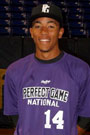 J.P. Crawford – SS
Crawford made a name for himself at an early age and was considered one of the top class of 2013 prospects throughout the entirety of his prep career. He represented the alluring potential five-tool superstar scouts dream about signing, and are inherently skeptical of. Throughout the draft process the conversation about Crawford centered around "sure, he could be a star, but is he really going to hit/stick at short/develop power?"
Crawford's profile had a narrow margin for error. If he didn't stick at shortstop then a lot would be riding on the offensive development. If the swing-and-miss issues never improved his value would be tied strictly to his defense, and there were better present defensive shortstops available in the 2013 draft. Following the 2012 WWBA World Championship, amateur baseball's most intensely competitive draft evaluation environment, Crawford's profile was explained in the 2012 Jupiter Impact Players article:
In some years, Crawford would be the top defensive shortstop in the class. As it stands, he has an edge on Oscar Mercado in arm strength and is similarly athletic. But beyond his defense, Crawford boasts an especially impressive upside with the bat. His smooth lefthanded swing features plus bat speed and good contact ability. He flashes present power, and should develop average or above power as he gets stronger and continues to develop as a hitter. That power potential is rare to find in a prospect with a legitimate chance to stay at a defensive home up the middle. His overall upside is higher than that of Mercado, though he will need to work very hard and reach his lofty ceiling in order to become a more valuable asset. Crawford's floor appears to be that of an everyday corner outfielder with above average tools across the board, but he has a shot at developing into the rarest and most valuable variety of prospect: a legitimate five-tool shortstop. If he can convince clubs with his performance this spring that there is a legitimate possibility of him achieving that upside, Crawford should come off the board early.
In hindsight with enough effort a pessimistic scout can find a way to talk themselves out of any player. And when compared to the other top prospects in the 2013 draft, it becomes more understandable how such a high ceiling prospect managed to fall to the Phillies and the 17th pick. SoCal had a very strong 2013 high school crop, headlined from the get go by sweet swinging first baseman Dominic Smith, who was Crawford's summer teammate for several years. While Smith didn't offer the same kind of upside as Crawford, he owned the best pure hit tool in the high school class and enough certainty to make scouts confident in his profile. Righthander Phil Bickford shot up draft boards as the spring of 2013 went on thanks to his rapid improvement that rounded out a profile that included a mid-90s fastball. Third baseman Ryan McMahon also drew some first round interest before slipping to the sandwich round. At the time Crawford was seen as having the most potential of that heady group, but also as the riskiest proposition.
With that risk, which chased off several organizations, comes tremendous reward potential. And after his first full season of pro ball Crawford has begun to answer the questions that nagged scouts about him coming into the draft. He now appears to be on his way to realizing that potential and the Phillies may be in line for a handsome reward. – Todd Gold
Miami Marlins
 Trevor Williams – RHP
Williams pitched for the late Mike Spiers and the ABD Bulldog teams in 2008-09 that rank among the best travel teams ever assembled. A typical lineup on a day that Williams started might have included Christian Yelich at first base, Jio Mier at shortstop, either Travis Harrison or Nolan Arenado at third base and Henry Owens on the bench waiting for his turn on the mound. During the spring he pitched for the legendary Rancho Bernardo High School program in northern San Diego. To say that Williams was surrounded by a winning environment in his developmental years as a player would be an understatement.
Williams was a command and control guy in at that time who really wasn't a professional prospect. He pitched pretty consistently in the 86-88 mph range, topping out at 89, from his sophomore to his senior year in high school with a long and loose arm action that was fairly projectable. He threw a big breaking lower-70s curveball for strikes and his changeup was advanced for a pitcher that age. Williams started and won many big games for ABD during that time and it was a given he'd be a solid Division I pitcher at Arizona State. He wasn't drafted out of high school.
Here's his report from the 2009 National Showcase:
Nice athletic pitcher's build, long limbs, mature look. Side step delivery, long swinging arm action with high elbow. FB to 87 mph in Metrodome, cuts FB occ, slow big CB with sweeping break, throws CB to spots, tries to work changeup down, mixes it up and tries to spot ball. Command type, follow for velo gain.
It wasn't until he got to Arizona State that Williams velocity jumped up into the low- to mid-90s and he developed the heavy sinking action on his fastball that defines his pitching style. He went 12-2, 2.05 as a sophomore to really put himself on the prospect map, although scouts were concerned about his lack of a swing/miss pitch. He did struggle a bit as a junior, going 5-6, 3.92, but was nonetheless picked in the second round (44th overall pick) by the Marlins. –David Rawnsley
 Avery Romero – 2B
Romero played in his first national tournament days after finishing middle school and by the end of his prep career he had more than 20 under his belt. In the early days Avery was seen as Jordan Romero's little brother, and the two would team up to form a double play partnership on numerous travel ball teams. But that dynamic swapped fairly quickly. Jordan, who was a solid college player, quickly became the other Romero, despite being a solid player in his own right.
Avery's game developed early and was always centered around strength and effort. While that profile doesn't project particularly well, there was enough present ability during his draft year that Romero's name was floated as a potential first round surprise. In his 2012 MLB Draft Profile David Rawnsley explained:
He’s getting strong talk as a potential first round pick, as in veteran scouts saying things like, 'Don’t be surprised at all when Avery Romero goes higher than lots of those other Florida high school guys you talk about so much.' ... He’s a yard rat with floppy hair, a dirty uniform and a smile on his face that hides his intense competitiveness boiling underneath. Romero is also much closer to 5-foot-10 than his listed 6-foot, 200-pound size, at least per the official measurements given at events such as the East Coast Pro and Area Code Games last summer. Not that scouts didn’t know that already. Plus, Romero ran the 60 at two events during 2011 and recorded times of 7.43 and 7.51. Scouts knew that already as well.
Scouts liked Romero the player, more than they liked Romero's raw tools. But there was one potential avenue to squeeze the requisite amount of value out of Romero's physical ability to justify a top two round selection: moving him behind the plate. His athleticism (or lack thereof) and arm strength were a natural fit, and his advanced hit tool would have been a huge asset for the position. Of course, it's a massive transition project to move a player behind the plate for the first time in pro ball and one that would have likely impeded his ability to develop as a hitter. The latter was seen by most as too much of a risk given that his profile was carried by the hit tool. Diminishing the one carrying tool that fit well in an offensive minded second base profile ultimately didn't make enough sense for the Marlins to follow through with on Romero, who they landed in the third round for a well above slot signing bonus.
One can look back on Romero's early pro career and wonder what might have been had he moved behind the plate and developed well there while still hitting as much as he has to this point. That would have added tremendous value to his prospect profile. But then it's also hard to argue with the production he's given the Marlins thus far. – Todd Gold
Justin Nicolino – LHP
The first time lefthanded pitcher Justin Nicolino took the mound at a Perfect Game event was at the 2008 18u WWBA National Championship. At the time he was throwing in the upper-70s to low-80s, but did exhibit advanced pitchability by changing speeds well and throwing four pitches for strikes.
His stuff took a significant step up the following summer, pitching in the 85-89 range while peaking at 90 mph at the 17u WWBA National Championship, showing a well-rounded four-pitch mix that included a curveball, slider and changeup. His changeup in particular stood out, throwing a perfect “slowball” with the exact same arm speed and action as his fastball.
Here is a summation of his performance from the PG scouting database:
Lanky, skinny, long limbs. Good mechanics. Easy delivery, arm really works, works downhill, online low effort 3/4 tall and fall delivery. Consistent arm speed with change, plus run on FB, above average high school 2-8 curveball. CH w/ fade from RHH. Good location on all pitches, fields position well. Decent pick-off, high ceiling.
At 6-foot-2, 155-pound athlete, Nicolino had obvious room for improvement as he continued to add strength to his lean and lanky frame. He also excelled at the plate at the high school level, playing at University High School in Orlando, Fla., and was committed to playing for the Virginia Cavaliers.
Nicolino's rapid improvement with plenty of room for added development at the next stage of his career was reflected in him being ranked the 122nd prospect in the high school class of 2010 prior to being selected in the second round of that year's draft by the Toronto Blue Jays. Those improvements continued in the lower levels of the minor leagues, and he was a key prospect included in the blockbuster trade between the Blue Jays and Marlins that sent Mark Buehrle, Josh Johnson and Jose Reyes to Toronto.– Patrick Ebert
Atlanta Braves
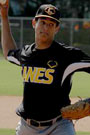 Alec Grosser – RHP
Grosser didn't have extensive experience on the showcase and travel circuit prior to the summer before his senior year in high school, but he quickly made a strong impression, showing a tall and athletic build with plenty of signs that he was just starting to scratch the surface of his lofty potential. His relative inexperience made him somewhat of an unknown commodity, although he did a lot to change that with his breakout performance in Jupiter at the 2012 WWBA World Championship where he worked at 89-92 mph. Grosser's athleticism also served him well on the left side of the infield and in the batter's box on days he didn't take the mound.
Here's a collection of scouting notes on Grosser from the summer and fall of 2012 from PG's internal database:
Great athlete. Large XL frame. Lean, wiry, projectable. Room to fill. Arm works well, loose, long arm action. Outstanding arm speed. Armside run on FB w/ sink. Fields position well.
Grosser continued to improve in between his standout performance in Jupiter at the WWBA World Championship in October of 2012 and the 2013 MLB Draft. Prior to his senior year in high school he was named to the Rawlings/Perfect Game All-Region team in the Atlantic Region, and as predicted his velocity continued to climb. After sitting in the upper-80s and peaking in the low-90s, Grosser frequently sat in the low-90s peaking at high as 94 mph during the spring of his senior year at T.C. Williams High School in Alexandria, Va.
That rapid improvement pointed to a player whose stock was on the rise, even more so than his No. 191 PG prospect ranking in the high school class of 2013 would indicate.Here's the report on Grosser prior to the 2013 draft in which he was ranked as the 140th player overall:
Grosser's name has begun to come up more frequently this spring, as he’s impressed scouts with improved velocity and consistency. His fastball has been up a tick this spring to 89-93 mph and he has reached as high as 94. His projectable 6-foot-4, 190-pound frame is also enticing to scouts, as he shows solid athleticism as well. He works out of a high three-quarters arm slot with outstanding arm speed and shows some consistency with his delivery. The secondary stuff is still going to need to come along, as the breaking ball is still somewhat slurvy at this point at 75-77 mph. He’s had a strong spring and has seen the presence of scouts steadily grow at his outings. There’s some disagreement among scouts as to where Grosser belongs in the draft, but there are many that believe he’s a candidate as high as the third round.
While he wasn't drafted as high as the third round, the Braves astutely plucked him up in the 11th round and were able to sign him away from his commitment to George Mason.– Patrick Ebert
New York Mets
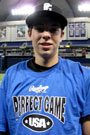 Steven Matz – LHP
A native of Long Island, Matz was pretty much a prototypical Northeast pitching prospect growing up in that he made his big push to top prospect status during the spring of his senior year. He was a slender and projectable southpaw who made plenty of stops on the summer circuit in 2008, including the PG National, the 17u WWBA National Championship playing for Baseball U and the East Coast Pro Showcase. He regularly pitched in the upper-80s with good feel for his fastball location, with a soft curveball that needed more power, and a workable changeup. The top velocity that PG ever saw from him was 91 mph that summer.
Here's his report from the PG National:
Matz has a very loose arm and shows the potential to be a big time power lefty. He used a high 3/4 arm angle with a fast, easy arm to produce a fastball that topped at 91 at the Metrodome. He showed good command of his fastball and also of a solid curveball and changeup. Hitters struggled picking the ball up out of his hand as he hides the ball well in his delivery. Don't be surprised if Matz shoots up the charts because we think he has even more velocity in that left arm.
During his senior season, however, Matz ramped it up, sitting in the low-90s and topping out at 94 mph according to many reports. The Mets did not own a first round pick in 2009, having sent it to the Angels as part of the price for signing closer Francisco Rodriguez on the free agent market, but selected Matz in the second round with the 72nd overall pick and gave him a well-above slot at $895,000 to sign him away from a Coastal Carolina scholarship. The pick had some hometown flavor, as Matz grew up approximately 50 miles away from Citi Field/Shea Stadium, but was not warmly embraced by the New York media.
Matz signed too late to throw in rookie ball in 2009 and the rest of his story is well known. An almost complete tear in his elbow necessitated Tommy John surgery and that kept Matz out all of the 2010 and 2011 seasons, meaning he didn't make his professional debut until June of 2012, nearly three years after he inked his original contract.– David Rawnsley
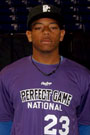 Dominic Smith – 1B
A favorite amongst most scouts that followed him closely, Smith was a bit of an acquired taste. The initial viewings of Smith generally leaves scouts with some questions about his desire and work ethic. Which is an odd contradiction with his actual personality, but it is a consistent phenomenon. It stems from the fact that Smith approaches the game, and life, with the type of laid back approach that matches the stereotype of his demographic as a lefthanded native of Southern California. His low heartrate game is also influenced by how naturally easy the game is for him, as there is no hint of panic to anything he does on the field, regardless of situation.
It takes an extended look to be able to discern the fact that the game unfolds more slowly to Smith from doubts about his interest in being on the field. But the more feel scouts develop for Smith as a player and person, the more clear it becomes that he is an extremely hard worker. The strides he made during the course of his amateur career were remarkable. He debuted as a young outfielder with an extremely long and violent swing, complete with a 'grip it and rip it' plate approach. A lot of scouts who were charged with making draft decisions on Smith never saw that underclass version. The Smith they saw was the matured, calm and under control hitter who showed not only a willingness, but almost a preference to drive the ball to the opposite field. As a result there was concern over his ultimate ceiling as a first baseman who didn't show a lot of game power.
The fact that Smith came off the board at 11th overall despite being a six-foot high school first baseman who had question as to his power speaks volumes as to how highly regarded his other tools were. He was widely regarded as having the best hit tool in the high school class and is frequently discussed by veteran scouts as being one of the best defensive high school first baseman they've ever scouted. He was limited to first base because he throws with his left hand, not because of a lack of aptitude for other positions. He was a low-90s lefthanded pitcher and also played a significant amount of right field for his high school team. He even made an occasional cameo appearance behind the plate as a lefthanded catcher. At the 2012 WWBA World Championship he caught two innings at the end of a consolation game and popped a 1.84 to second base and a 1.55 to third (with a coach standing in the righthanded batter's box).
Moreover, Smith wasn't just an elite player on the field. He was also his team's leader off of it. He took younger players under his wing and imparted lessons that he had just recently learned himself. He was an unofficial recruiting coordinator for his travel ball team and was well respected by both his teammates and players from other teams on the national showcase circuit. He could frequently be found holding court at the park with other top prospects from around the country before and after his games. The expectation on Smith wasn't just that he'd play in the Major Leagues someday, but rather that when he played in the Major Leagues someday he'd be a clubhouse leader. – Todd Gold
Washington Nationals
Michael Taylor – CF
Although Michael Taylor was ranked 370th in PG's class of 2009 high school player rankings his athletic talents were evident. The Washington Nationals recognized those talents in taking him in the sixth round of that year's draft, as he has enjoyed a steady development on his way to the big leagues, making his debut in mid-August this past year.
Currently a center fielder, Taylor played shortstop and also pitched at Westminster Academy in Fort Lauderdale, Fla. He enjoyed a big growth spurt between his junior and senior years, going from 5-foot-10, 160-pounds to 6-foot-3, 185-pounds, with long, wiry strong limbs, quickly passing the eye test for onlooking scouts.
On the mound his velocity saw a similar spike during that time, going from 77-80 mph at the 2007 WWBA Underclass World Championship to 87-90 with a sharp mid-70s curveball at the 2008 WWBA World Championship. However, his graceful infield actions and promising bat at the plate pointed to a future as a position prospect.
Here are some collective notes from his time spent at Perfect Game tournaments:
Tall, very athletic body. Upton body. Good actions at SS, winds up to throw. Slick fielder, all over the field, plus arm. Quick through zone, good bat speed, good speed. Line drive swing, quick hands, can swing it. Long, loose arm action. Good arm speed, live arm. Good downhill plane, hard, sharp 11-to-5 curveball for strikes.
While he spent his first full season as a professional as an infielder, seeing time at all four infield positions in 2010, he was converted to an outfielder full-time for the beginning of the 2011 season. – Patrick Ebert
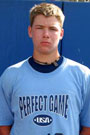 Jake Johansen – RHP
Johansen has always been a "just wait, be patient, this guy has a chance to be really, really good if it all comes together" type of prospect.
Johansen first appeared at a PG event in 2007 following his sophomore season at Allen High School in North Texas. He was 6-foot-5, 215-pounds and was as much a power hitting first baseman at that point as he was a pitcher. He took a turn on the mound, however, and was 80-83 while topping out at 85 mph from a high energy delivery while flashing a decent 74 mph slider.
At his next sighting at Jupiter in 2008, Johansen had grown to 6-foot-6, 240-pounds and was now in the upper-80s and showed a calmer delivery and good command of his fastball. His slider had developed real power, up to 81 mph, and had plus potential. The Mets made him a summer follow in the 45th round but Johansen ended up at Dallas Baptist.
Johansen's first two years at Dallas Baptist showed how far he was away from competing at the college level. He red-shirted during his first year, then threw only 13 innings as a red-shirt freshman, posting a 12.15 ERA and allowing 16 hits and 16 walks. His 2011-12 season showed progress, as Johansen appeared in 20 games, including four starts, posting a 5.48 ERA in 46 innings. He was still allowing lots of hits (47) and walks (32) but was competitive on a 41-19 NCAA regional team. The Pirates noticed and speculated a 27th round pick on Johansen, but he decided to return for a fourth year at Dallas Baptist.
Johansen really came on during the 2012-13 season, mostly because he virtually eliminated his walks. He started 15 games for DBU, going 7-6, 5.40 in 88 innings, walking only 26 hitters against 75 strikeouts but allowed 109 hits. His overall stuff was top drawer, with a fastball that sat in the mid-90s and topped out at 98 mph, although the pitch was very straight and tended not to roam much from the middle of the plate. His mid-80s slider also flashed plus at times. It was a power arm profile with two present pitches that could already be graded out on the plus side, although the changeup and command were still short. But it was impossible to mistake Johansen's progress.
The Nationals picked Johansen in the 2013 draft right about where the industry consensus had him pegged, in the second round with the 68th overall selection.– David Rawnsley